
Search results for
(Showing 0-15 out of 337 results)
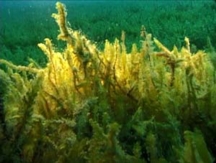
The Calliergon giganteum grows in the arctic tundra which is a harsh cold environment in the Northern Hemisphere within the arctic circle. There are strong winds, up to 100 miles per hour. In the tundra it is very cold: the average winter temperature
Read More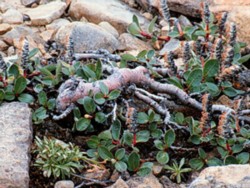
Salix arctica whose common name is Arctic willow or rock willow can be found in the North American tundra. The North American tundra consists of Northern Alaska and Northern Canada. It stretches from 52 N to 65 N and from 60 W to 165 W.
Read More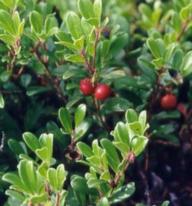
Bearberry is a low growing evergreen. It has a stem that rises 2-8" off the ground and is covered in a thick bark and fine silky hairs. On the stem are many oval-shaped, leathery leaves that are _" to 1" long. The flowers have five petals and are pale
Read More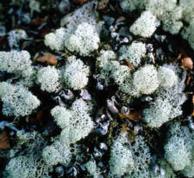
Caribou moss grows in arctic and northern regions around the world. It grows on the ground and on rocks. It looks like a foamy, gray-green spongy mass, and grows to be 1 to 4 inches high. The stems, or stocks, are hollow, and branch out many times. Although it is called
Read More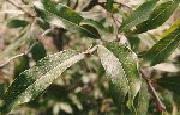
The twigs on a willow are soft, slender, and they bend easily. A willow has thin branches. The leaves are narrow and grow alternately on the branch. Some leaves have serrated edges.
Read More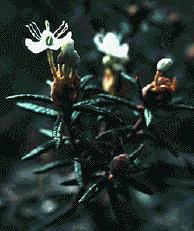
The Labrador tea plant grows to be 4 to 5 feet. It will grow up straight in the southern latitudes of the tundra, but in the colder northern latitudes it will creep over the ground forming a carpet.
Read More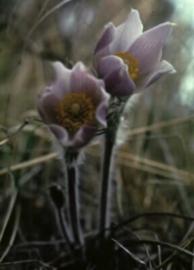
Pasque flower is a pretty tundra plant. It is a member of the Ranunculaceae family, which is Latin for little frog. The name was given to the family because a group of plants in this family grow where frogs live.
Read More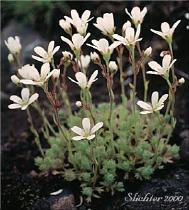
Tufted Saxifrage is a small perennial that grow in thick mats on the tundra. It has several straight flower stems which can get 3-15 cm high. The leaves are rigid and very hairy and only 5-10 mm long. Their tips divide into 3 lobes.
Read More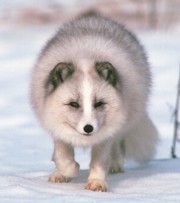
The North American tundra is located at latitudes 60° to 85° North and longitudes 55° to160° West which includes northern parts of Canada and the state of Alaska. The tundra is a cold barren wasteland that includes snow, rocks and very little variety in vegetation. It is in this place where the Arctic fox is found.
Read More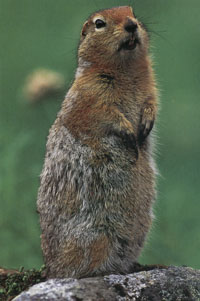
This ground squirrel might be small but it is very interesting how it is able to survive in the severe elements of the North American tundra. The North American tundra biome is found from 57° to 80° North latitude, and 85° to 160° West longitude.
Read More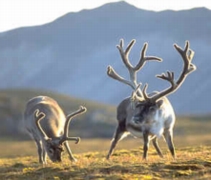
The caribou lives in the arctic tundra, mountain tundra, and northern forests of North America, Greenland, Scandinavia, and Russia. It is estimated that there are about 5 million caribou in the world. They were first domesticated in Norway and northern Asia and known as reindeer.
Read More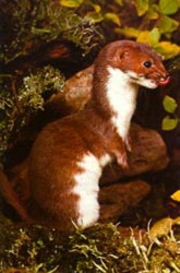
The ermine is found all over Canada, northern USA, and Eurasia. The Ermine lives in northern biomes such as taigas and tundras. The Siberian tundra is a vast land that is almost completely dark during the winter season because of its far north location.
Read More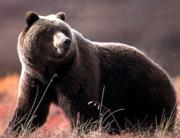
Most bears are found in North America and Eurasia. Grizzlies are found on the Alaskan and northwestern Canadian tundra. They are considered a subspecies of the brown bear. Most grizzly bears are found in the northwestern part of North America.
Read More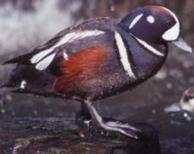
The harlequin duck gets its name from the decorated appearance of the male harlequin, because it resembles the colorful costumes worn by "harlequins", who were people dressed as clowns.
Read More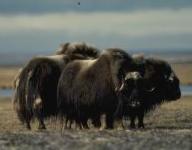
The musk ox live in the frozen tundra of northern, Alaska, Canada, Ellesmere Island, Greenland, Norway, Sweden and Siberia. No other hoofed animal lives as far north as the musk ox.
Read More