
Search results for
(Showing 255-270 out of 337 results)
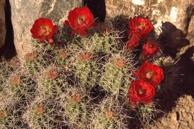
There are many different kinds of hedgehog cacti. The Crimson hedgehog cactus is a small barrel shaped cactus that grows in clumps of a few to a hundred stems. The stems are cylindrical in shape and are up to 1 foot long and 1 to 2 1/2 inches thick.
Read More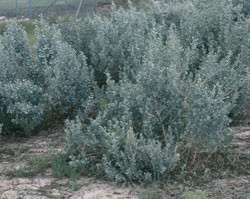
The common saltbush is often mistaken for "sagebrush". It is actually related to the "tumbleweed", or Russian thistle and is part of the "goosefoot" or "pigweed" family. Other members of this family considered weeds include arrowweed and kochia.
Read More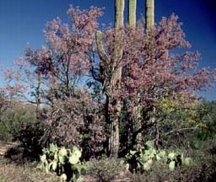
The desert ironwood only grows in the washes and valleys of the Sonoran Desert below 2,500 foot elevation. The Sonoran Desert is located in southwestern Arizona, southern California, and the northwestern part of Mexico.
Read More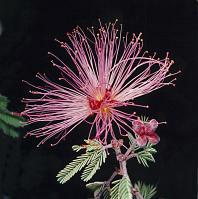
The Fairy Duster has pink-orange puff balls that can be up to 2 inches in diameter. These can bloom all year round but mostly in February through May.
Read More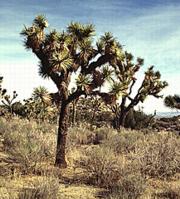
The Joshua Tree got its name from the Mormon pioneers who thought the tree reminded them of Joshua, from the old testament of the Bible, a prophet who was waving them on to the Promised Land.
Read More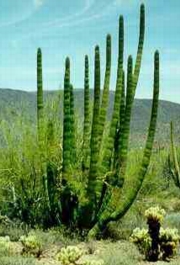
The organ pipe cactus grows only in the Sonoran Desert. It is found from southwestern Arizona south to Sonora, Sinaloa and Baja California in Mexico. Organ Pipe National Monument in Arizona was created to protect the cactus in its northern most range.
Read More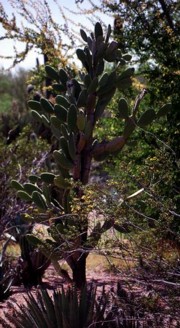
The prickly pear cactus is a widely used and versatile cactus. It can be used in many different ways such as foods, crops, etc.. In many places the prickly pear is grown as a crop, but in others they are just grown in the wild.
Read More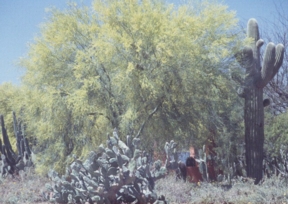
The yellow palo verde is a very strange looking shrub or small tree which grows in the Sonoran Desert of the southwestern United States and northern Mexico. It has adapted in unique ways to survive the killing heat of the desert sun.
Read More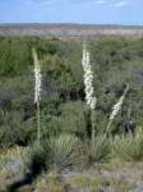
Imagine bumping down a dusty desert road, looking at the wide open land stretching out in all directions. Along the sands are plants, some squatting in the burning sun, others standing tall, watching the sky for a chance of rain.
Read More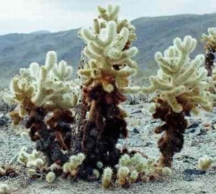
From a distance the jumping cholla, or teddy bear cholla, looks like a fuzzy, soft plant with many short, fuzzy branches looking like teddybear arms, growing from the top. As you get closer you realize that the cuddly looking plant is completely covered with silvery spines.
Read More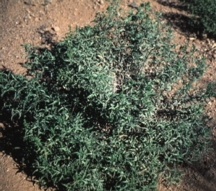
Triangle-leaf bursage is a native plant of the Sonoran Desert and can be found throughout southwestern Arizona, USA, south into Sonora and Baja California, Mexico. Triangle-leaf bursage can be found growing in upper and lower bajadas, lowland creosote growths and desert grasslands.
Read More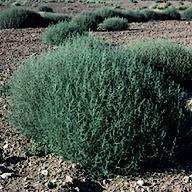
When westerns were big in the movies, you could always hear some lonesome cowboy sing about the tumbling tumbleweed. The tumbleweed stood for everything a cowboy was; a little ugly, lanky, and a foot loose rambler.
Read More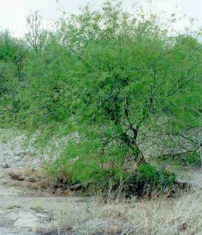
Velvet mesquite is one of the most common, and important plants of the southwestern deserts of the North American continent. It is useful to humans and essential to the survival of wildlife in the desert.
Read More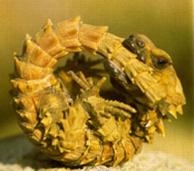
The nostrils of the Armadillo Lizard are formed into little tubes. The tubes help the Armadillo Lizards smell for food or predators. A ground dwelling lizard, it is active in the daytime and feeds on a wide variety of insects, as well as on spiders and other invertebrates.
Read More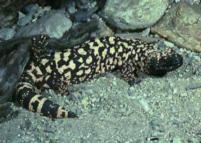
The Banded Gila Monster is very shy but can strike back very quickly, with painful results. It is a subspecies of the Gila Monster (Heloderma suspectum), and is one of two venomous types of lizard in the world.
Read More