
Search results for
(Showing 300-315 out of 337 results)
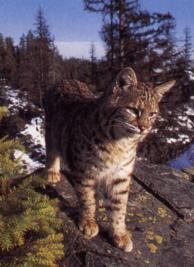
The large coniferous forest found in Canada is called the Taiga. There are many swamps, mountains and forests in the Taiga that are home to the Bobcat. Throughout much of the United States the bobcat lives in forests, but can also be found in desserts and chaparral.
Read More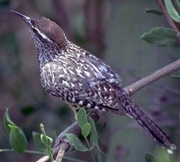
The Cactus Wren lives in the arid and semi-arid deserts of southwestern United States and the chaparral of southern California and northern Mexico. The Cactus Wren is usually found below 4,000 feet. The California chaparral has hot and dry summers and humid and cold winters. It normally gets about 6 inches of rain per year.
Read More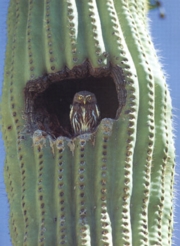
For a tiny bird, the cactus ferruginous pygmy-owl has a very long name. It is small enough to hold in your hand. It averages 6.5 inches (17 cm) in length and weighs only 2.5 ounces (62 g). Females usually weigh a few tenths of an ounce more than the males.
Read More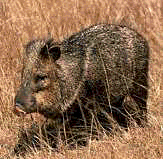
The javelina is the only wild pig in North America. It looks exactly like a real pig except a little bigger. It is a grizzled blackish-gray color with a yellowish band which runs under the neck. The name collared peccary comes from the ruff of hair around its neck.
Read More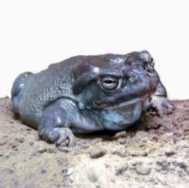
A toad is a small animal without a tail that looks alot like a frog. It is a type of animal called an amphibian. That means that toads live in water and on land. Toads have dry, warty skin with a raised area behind the eyes.
Read More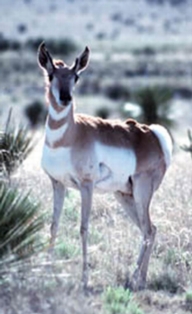
Pronghorn Antelopes are native to America and are found nowhere else in the world. They are the last surviving member of the Antilocarpidae family. Once they were as abundant as the buffalo. But by the 1920s only about 13,000 animals remained.
Read More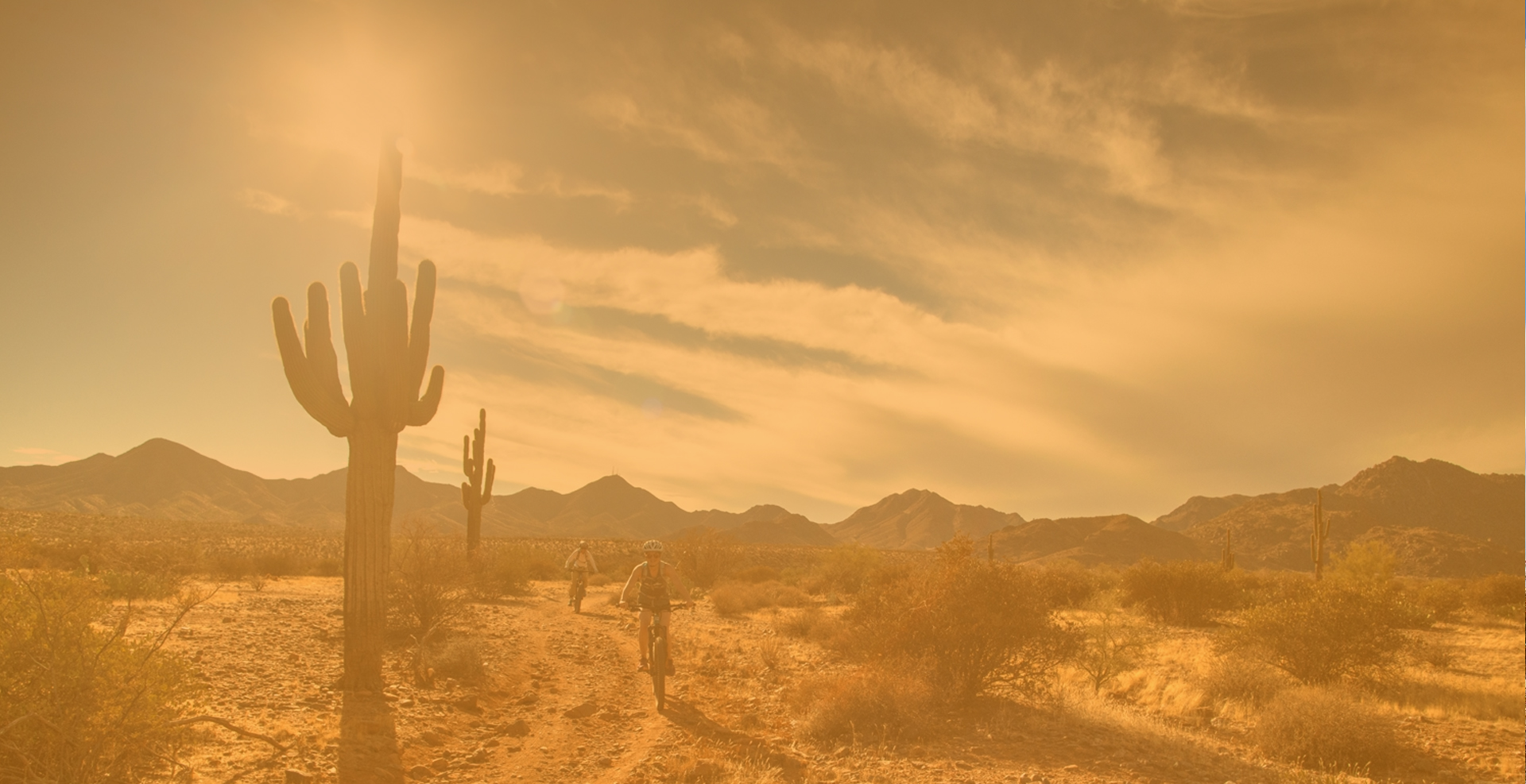
The sunlight of the Sonoran desert changes during the day and it gets hotter. Seasonal temperatures range from an average of 52º F in the winter, to 86º F in the summer. In some seasons the temperatures can reach 32º F at night.
Read More
Alpine Phacelia is a tubular, bell-shaped or bowl-shaped flower. It can be blue, violet, or white in color. The anthers of the flowers stick way out past the flower, giving it a fringed look.
Read More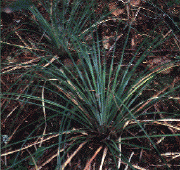
Bear Grass looks like a grass, but really belongs to the lily family. It is about 4.5 feet tall. Its olive-colored, grass-like leaves grow from the base of the plant and are tough and wiry. The outside leaves clasp around the stem.
Read More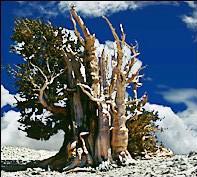
The bristlecone pine only lives in scattered, arid mountain regions of six western states of America, but the oldest are found in the Ancient Bristlecone Pine Forest in the White Mountains of California. There the pines exist in an exposed, windswept, harsh environment, free of competition from other plants and the ravages of insects and disease.
Read More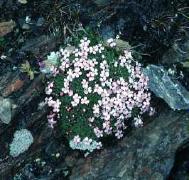
Moss Campion is part of the pinks family. It is well adapted to growing in the lower, and sometimes higher Alpine regions. Moss Campion only grows about 5-15 cm tall, hugging the ground for warmth.
Read More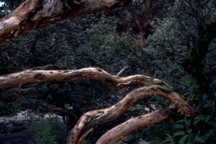
The Polylepis forest is located in the Andes Mountains. Polylepis forests occur at altitudes of up to 4,500 meters in sheltered areas. Most of the original forest is in the cold Western Cordillera of Bolivia. There is only ten percent left of the original forest.
Read More
The Polylepis forest is located in the Andes Mountains. Polylepis forests occur at altitudes of up to 4,500 meters in sheltered areas. Most of the original forest is in the cold Western Cordillera of Bolivia. There is only ten percent left of the original forest.
Read More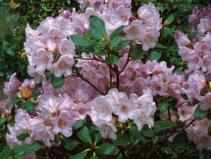
Rhododendron campanulata ssp. aeruginosum is a wild species rhododendron found in the Himalayan alpine regions of Northern India, Bhutan, and Nepal. It grows on the stony alpine slopes and ledges at altitudes of 12,000 to 14,500 feet.
Read More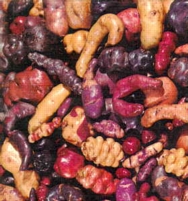
The wild potato is a relative of the cultivated potato, and is found in the alpine biome of the Andes Mountains. In Latin, the word alps means high mountains and the word alpine comes from the word alps.
Read More