
Search results for
(Showing 315-330 out of 337 results)
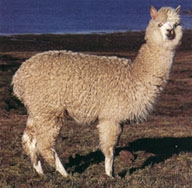
The alpaca is a type of llama that lives in the Andes Mountains of South America. The alpaca is part of the camelidae family and is closely related to the well-known llama. The llama is a much larger animal, standing up to 4 feet at the shoulder and weighing 340 pounds.
Read More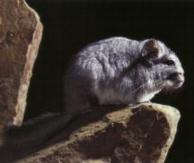
n the wild, chinchillas can be found in the Andes alpine regions, but because they are an endangered species, they are not easily found. The chinchilla has a silvery gray pelt, with black tipped hair which is very soft.
Read More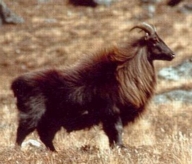
The Himalayan tahr is one of three species of tahr. Other tahrs are the Arabian tahr of Oman, and the Nilgiri tahr of southern India. The Himalayan tahr is a relative of the wild goat and is specially adapted to life on the rugged mountain slopes and montane woodlands of the Himalayas.
Read More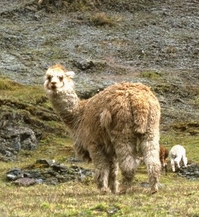
Most llamas today live in the high Andes Mountains of western South America. They can be found in Argentina, Bolivia, Chili, and especially Peru. It is believed that llamas may be the domesticated descendants of the wild guanaco.
Read More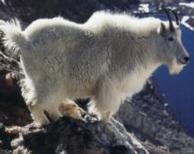
Mountain Goats can be found in the mountains of northwestern regions of North America, where they seem to cling and move around on the impossibly steep slopes. Mountain Goats have two beige colored horns that curl back and reach a length of about twelve inches.
Read More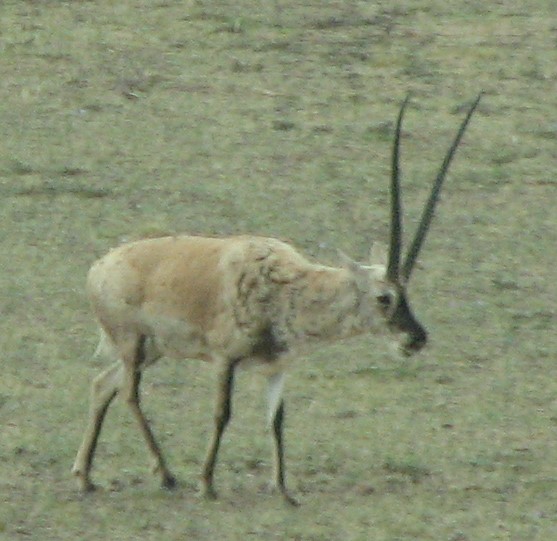
The Tibetan antelope, or chiru, has an undercoat so fine, soft, and warm, that the demand for it is rapidly leading to its extinction. Called shahtoosh (from the Persian "king" and "wool"), the wool makes scarves and shawls so light that they can be threaded through a wedding ring.
Read More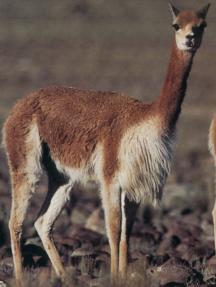
The vicuña is a member of the camel family. It is the smallest of the six species of camel, and is thought to be the wild ancestor of the alpaca. It lives on the high, grassland plateaus of the Andes mountains which range from southern Peru to northern Chile and into parts of Bolivia and Argentina.
Read More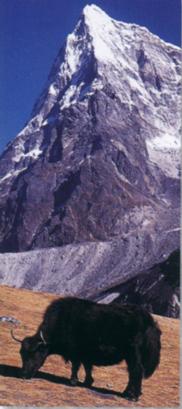
Most domestic yaks of Tibet, and central Asia have black-brown, dense, woolly, and extremely shaggy coats. The wild yak of the Tibetan Plateau has a black-brown coat with patches of white. They have horns that grow up to 20 inches long in females, and 40 inches in males.
Read More
The Alpine biome is one of the coldest biomes in the world. It is so cold because of its high altitudes. Summer temperature range between -12 degrees Celsius to 10 degrees Celsius. The average precipitation is 30 cm a year.
Read More
The Himalayan Alpine range is located in Asia in the countries of Nepal, Tibet (China), India, Pakistan and Bhutan. The range makes a curve of 1,500 miles through Southern Asia Because the Himalayan mountain range is at a high altitude the air is very thin.
Read More
Rhododendron campanulata ssp. aeruginosum is a wild species rhododendron found in the Himalayan alpine regions of Northern India, Bhutan, and Nepal. It grows on the stony alpine slopes and ledges at altitudes of 12,000 to 14,500 feet.
Read More
The Himalayan tahr is one of three species of tahr. Other tahrs are the Arabian tahr of Oman, and the Nilgiri tahr of southern India. The Himalayan tahr is a relative of the wild goat and is specially adapted to life on the rugged mountain slopes and montane woodlands of the Himalayas.
Read More
The Tibetan antelope, or chiru, has an undercoat so fine, soft, and warm, that the demand for it is rapidly leading to its extinction. Called shahtoosh (from the Persian "king" and "wool"), the wool makes scarves and shawls so light that they can be threaded through a wedding ring.
Read More
Most domestic yaks of Tibet, and central Asia have black-brown, dense, woolly, and extremely shaggy coats. The wild yak of the Tibetan Plateau has a black-brown coat with patches of white. They have horns that grow up to 20 inches long in females, and 40 inches in males.
Read More
The Andes Mountains are located in South America, running north to south along the western coast of the continent. The latitude is 10° N. to 57° S. The longitude is 70° W. to 80° E.
Read More